
Cursor vs. Windsurf: A Comparative Analysis of AI Code Editors

In the rapidly evolving landscape of AI-assisted coding, two prominent tools have emerged: Cursor AI and Windsurf. Both platforms aim to revolutionize the way developers interact with code, but they differ significantly in their features, functionalities, and user experiences. This article provides an in-depth comparison of these two AI code editors, highlighting their strengths, weaknesses, and which might be the best fit for your coding needs.
Introduction to Cursor AI
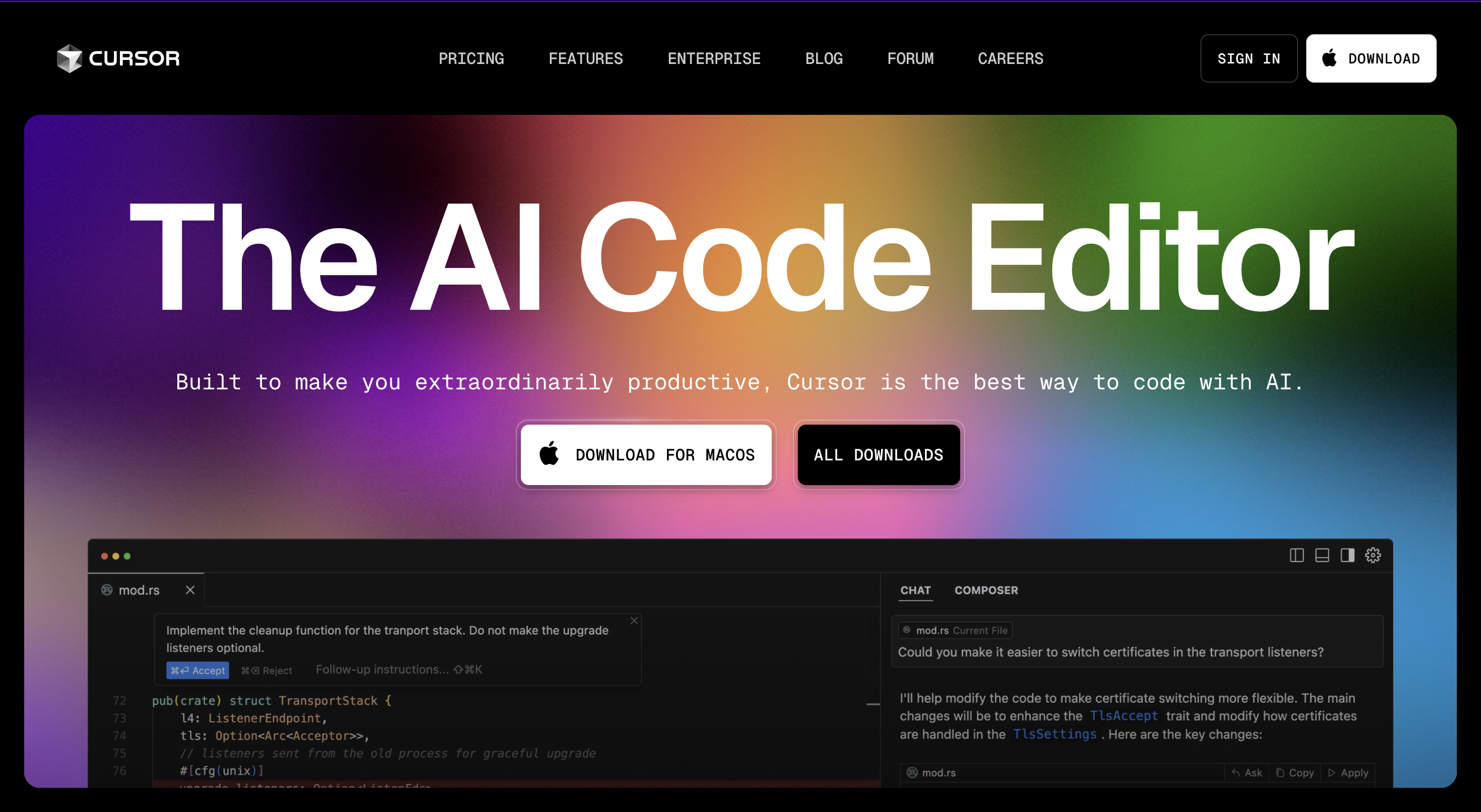
Cursor AI is a code editor built on the foundation of Visual Studio Code (VS Code), integrating advanced AI capabilities to enhance coding efficiency. It leverages models like GPT-4 and Claude to offer intelligent code suggestions, natural language editing, and proactive debugging. Cursor AI supports multiple programming languages, with notable performance in Python, JavaScript, and TypeScript.
Introduction to Windsurf

Windsurf, on the other hand, is an agentic code editor that goes beyond mere code completion. It offers a comprehensive understanding of the entire project, automates debugging, and can even run code for you. Windsurf's features include Supercomplete, Inline AI, and Cascade, which provide advanced code generation and modification capabilities.
Key Features Comparison
| Feature | Cursor AI | Windsurf |
|---|---|---|
| AI Models | GPT-4, Claude | Advanced models with full project understanding |
| Code Completion | AI-powered completion and generation | Supercomplete with intent prediction |
| Natural Language Support | Natural language editing | Inline AI for specific code modifications |
| Debugging | Proactive debugging | Automated debugging and code iteration |
| Project Management | Basic project analysis | Complete project management with Cascade |
| Pricing | $20/month (with free tier) | $10/month (unlimited access) |
Strengths and Weaknesses
Cursor AI
- Strengths:
- Ease of Use: Cursor AI is built on VS Code, making it familiar and easy to adopt for existing users.
- AI Integration: Offers advanced AI features like natural language editing and proactive debugging.
- Weaknesses:
- Limited Contextual Understanding: While it provides context-aware suggestions, it may not fully understand the entire project scope.
- Cost: Priced at $20/month, which might be higher than some developers are willing to pay.
Windsurf
- Strengths:
- Advanced Features: Offers full contextual awareness, automated debugging, and project management.
- Pricing: More affordable at $10/month with unlimited access.
- Weaknesses:
- Steep Learning Curve: Requires time to fully utilize its advanced features.
- Dependence on AI: May require more trust in AI-driven decisions.
Conclusion
Choosing between Cursor AI and Windsurf depends on your specific needs and preferences. If you're looking for a more familiar interface with robust AI features, Cursor AI might be the better choice. However, if you're seeking a more comprehensive AI-driven coding experience with advanced project management and automation, Windsurf is likely the superior option. Both tools are transforming the coding landscape, but Windsurf offers a more futuristic approach to coding with AI.
Ultimately, the decision should be based on whether you prioritize ease of use and familiarity or advanced AI capabilities and automation.
MatterAI builds frontier AI infrastructure for engineering teams — from inference-optimized models to autonomous coding agents and agentic code reviews.
Explore what we're building:
- Orbital IDE — Autonomous AI coding agent with background agents and deep codebase memory
- AI Code Reviews — Agentic pre-commit reviews across GitHub, GitLab, and Bitbucket
- Axon Models — Frontier-grade reasoning models at 70% lower inference cost
Share this Article:
More Articles
DSpark Speculative Decoding: How It Works & Speeds Up LLM Inference
Learn how DSpark speculative decoding accelerates LLM inference by 60–85% using semi-autoregressive drafting and confidence-scheduled verification.
Top 5 CLI Coding Agents in 2026: A Comprehensive Comparison
A deep dive into the top 5 CLI coding agents of 2026: OrbCode, Claude Code, Codex CLI, OpenCode, and Grok Build. Compare pros, cons, pricing, models, and wins to find the best fit for your workflow.

Data Annealing: The Hidden Optimization Layer Behind Modern AI Systems
Modern AI systems are no longer trained on static datasets. Frontier models continuously reshape, refine, replay, and optimize data throughout training — creating a new paradigm we call Data Annealing.

The Economics of AI Agents: How Companies Are Reducing AI Inference Costs by 70%
AI agents are becoming core infrastructure inside modern companies, but inference costs are scaling faster than most teams expect. Here's why AI agents become expensive — and how organizations are reducing operational AI costs by up to 70%.
How We Rebuilt the Context Layer Behind AI Code Review
Let's dive deep into the most advance and cost effective code reviewer
Continue Reading
DSpark Speculative Decoding: How It Works & Speeds Up LLM Inference
Learn how DSpark speculative decoding accelerates LLM inference by 60–85% using semi-autoregressive drafting and confidence-scheduled verification.
Top 5 CLI Coding Agents in 2026: A Comprehensive Comparison
A deep dive into the top 5 CLI coding agents of 2026: OrbCode, Claude Code, Codex CLI, OpenCode, and Grok Build. Compare pros, cons, pricing, models, and wins to find the best fit for your workflow.
Data Annealing: The Hidden Optimization Layer Behind Modern AI Systems
Modern AI systems are no longer trained on static datasets. Frontier models continuously reshape, refine, replay, and optimize data throughout training — creating a new paradigm we call Data Annealing.
Ship Faster. Ship Safer.
Join thousands of engineering teams using MatterAI to autonomously build, review, and deploy code with enterprise-grade precision.